
Unrefined vs Refined Shea Butter
Learn the key differences between refined and unrefined shea butter, and how to choose the best quality for skin health.
EcoShea Team
7/20/20243 min read
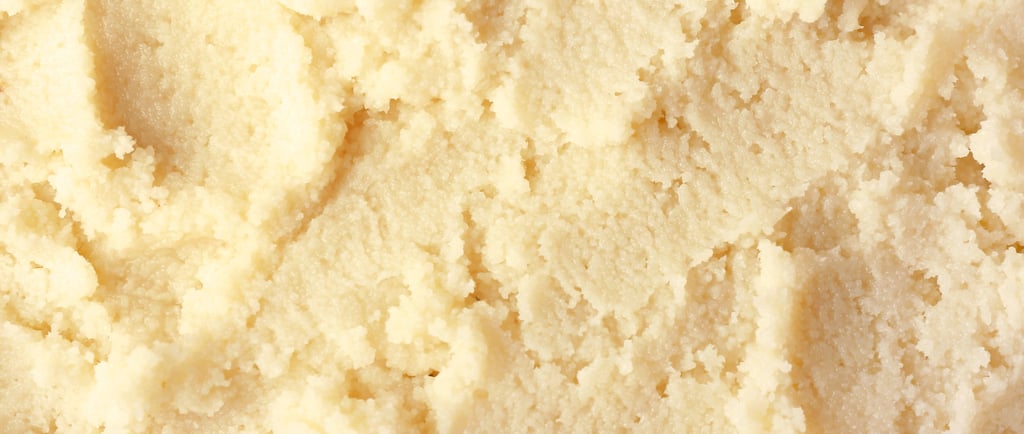
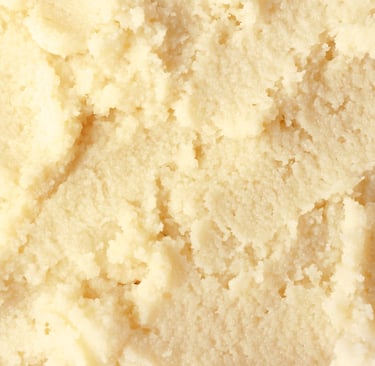
Shea butter gets talked about a lot in natural skincare—but very rarely is it explained properly.
Because not all shea butter is the same. And if you don’t understand how it’s processed, it’s easy to end up using something that looks the part but delivers very little in terms of real skin benefit.
So instead of just asking “is this shea butter?”, the better question is:
What’s actually left in it by the time it reaches your skin?
Not all shea butter is biologically equal
From a distance, most shea butter looks similar. But once you understand how it’s produced, the differences become obvious.
You’ll typically see it labelled as:
Refined
Unrefined
Raw
Pure
Natural
The issue is that terms like “pure” or “natural” are not tightly regulated in cosmetics. A product can be heavily processed and still carry those labels.
So the absence of terms like “unrefined” or “cold-processed” usually tells you what you need to know.
Because refining changes the composition completely.
What refining actually does (and why it matters)
Refined shea butter is processed using heat, filtration, and sometimes solvents to remove:
Colour
Scent
Free fatty acids
Impurities
On paper, that sounds like an upgrade. But, in reality, it strips out a large portion of what makes shea butter biologically active in the first place. What you’re left with is a more stable, odourless fat—but one that has lost much of its functional value. So while it may be easier to formulate with, it’s no longer doing the same job on the skin.
The science behind Unrefined Shea Butter
High-grade, unrefined shea butter isn’t just a moisturiser—it’s a complex lipid matrix that closely mirrors the skin’s own barrier structure.
Its composition typically includes:
Triglycerides (primarily oleic and stearic acids)
These form the structural base and help reinforce the skin barrier.Unsaponifiable fraction (up to ~10%)
This is where most of the biological activity sits.
Within that fraction, you’ll find:
Triterpenes (anti-inflammatory, barrier-supportive)
Phytosterols (help regulate skin repair and inflammation)
Tocopherols (Vitamin E) (antioxidant protection)
Phenolic compounds (help reduce oxidative stress)
There’s also naturally occurring Vitamin A precursors and essential fatty acids sometimes referred to as Vitamin F, which support skin regeneration and elasticity.
Research has shown that these compounds contribute to:
Reduced inflammation
Improved barrier repair
Protection against oxidative damage¹
Enhanced skin hydration and elasticity²
This is why unrefined shea butter behaves very differently on the skin compared to refined versions.
It’s not just coating the surface—it’s interacting with the biology.
What high-grade shea butter should look and feel like
If you’re choosing shea butter properly, there are a few non-negotiables:
Colour: light beige (not pure white)
Scent: natural, slightly nutty or smoky
Texture: rich but melts easily with body heat
If it’s completely odourless and bright white, it’s almost certainly refined.
A useful comparison is olive oil. The more processed it is, the more neutral it becomes—but also the less nutritionally valuable.
The same principle applies here.
Why we only use the highest grade at Ecoshea Organics
At Ecoshea Organics, we only work with high-grade, certified, unrefined shea butter.
That means:
Carefully selected raw nuts
Traditional processing methods
No chemical refining
Full preservation of the unsaponifiable fraction
But just as importantly, it’s rigorously tested.
Because one thing that often gets overlooked is that “raw” doesn’t automatically mean “safe.”
Poorly processed shea butter can contain:
Microbial contamination
Oxidation (rancidity)
Residual impurities
That’s why proper sourcing and lab testing matter just as much as whether it’s refined or not.
We ensure:
Quality control at source
Independent certification
Dermatological testing
Because if you’re putting something on your skin daily, it needs to meet a higher standard than just “natural.”
Why unrefined shea butter works so well for the skin
When you apply high-quality, unrefined shea butter consistently, a few key things tend to happen:
Barrier function improves
Moisture loss decreases
Skin feels more stable and less reactive
Dryness and tightness reduce significantly
This is largely due to its ability to:
Reinforce lipid structure
Reduce transepidermal water loss
Provide antioxidant protection
Support low-level inflammation control
And importantly—it does this without overwhelming the skin.
Practical takeaways when buying shea butter
If you take nothing else from this, focus on this checklist:
1. Look for “unrefined” or “raw” (and verify it)
Don’t rely on “natural” or “pure” alone.
2. Check colour and scent
Beige with a natural smell = good sign
White and odourless = likely refined
3. Prioritise tested and certified sources
This is non-negotiable if you care about quality.
4. Understand what you’re using it for
If your goal is skin health—not just texture—processing matters.
5. Use it consistently, not excessively
A small amount, applied regularly, is far more effective than overuse.
Final thought
Shea butter isn’t just an ingredient—it’s a system. But only if it’s left intact. Once you refine it, you simplify it. And in doing so, you lose much of what made it valuable in the first place.
At Ecoshea Organics, the focus is simple: keep the ingredient as close to its natural state as possible, and let the biology do the work.
Because when the input is right, the skin tends to respond the way it’s supposed to.
References
Maranz S, et al. Chemistry of shea butter. J Agric Food Chem. 2004.
Honfo FG, et al. Nutritional composition and bioactive compounds in shea butter. Food Chem. 2014.
One Nut at a Time
Join our community
© 2026.
All rights reserved.